

Introduction
A crypto payments network is a blockchain-based system that allows individuals and businesses to send and receive digital assets quickly, securely, and without relying on traditional banking infrastructure. When combined with mesh funding, this model becomes a decentralized payment and funding ecosystem where capital, liquidity, and operational support are distributed across multiple participants instead of a single centralized entity. In simple terms, crypto payments network mesh funding represents a new way to build and scale global payment systems using blockchain technology and shared financial participation.
Funding plays a critical role in the growth of crypto payment networks. Large-scale adoption requires continuous investment in infrastructure development, liquidity management, regulatory compliance, and stablecoin settlement mechanisms. Without sufficient funding, payment networks struggle to scale globally, maintain reliability, and offer seamless user experiences. Mesh-based funding models help solve this issue by enabling flexible capital deployment, faster settlements through stablecoins, and stronger network resilience. This approach has become increasingly important as demand grows for a secure and scalable crypto payments network capable of supporting real-world commerce.
This article explores the evolution of Mesh as a leading crypto payments network, examining how its funding strategy supports long-term growth. It will cover key funding rounds, including the use of stablecoins, explain the underlying technology such as SmartFunding and API integrations, and analyze real-world use cases, benefits, and challenges facing decentralized payment infrastructures today.
What Is a Crypto Payments Network?
A crypto payments network is a blockchain-powered system that allows users and merchants to send and receive cryptocurrencies seamlessly, securely, and almost instantly. Unlike traditional banking methods, these networks do not require intermediaries such as banks or payment processors, enabling faster transactions and global accessibility.
In contrast to traditional payment rails like credit cards or bank transfers, which often involve high fees, slow settlement times, and cross-border restrictions, crypto payments networks allow for 24/7 transactions, lower processing costs, and borderless payments. Users can transact directly with merchants or other individuals, often with only a small fee for network validation.
Decentralization is a key advantage of crypto payments networks. By distributing transaction verification and network control across multiple nodes rather than relying on a single central authority, decentralized networks provide:
- Lower fees: No middlemen taking a percentage of each transaction
- Faster settlements: Transactions can settle in minutes or seconds rather than days
- Enhanced security: Blockchain technology prevents fraud and ensures transparency
In short, crypto payments networks are redefining how digital commerce operates, offering faster, safer, and more cost-effective alternatives to traditional payment systems. This foundational understanding is essential to appreciate how Mesh and other networks leverage mesh funding to scale and improve global crypto payments infrastructure.
Source: Mesh Connect

What Is Mesh and Why It MattersWhat Is Mesh and Why It Matters
Mesh is one of the leading crypto payments networks in 2024–2026, gaining recognition for its innovative approach to global digital payments. Its primary goal is to connect wallets, cryptocurrency exchanges, payment service providers (PSPs), and merchants into a seamless, interoperable ecosystem. This allows individuals and businesses to transact across borders quickly, securely, and with minimal friction.
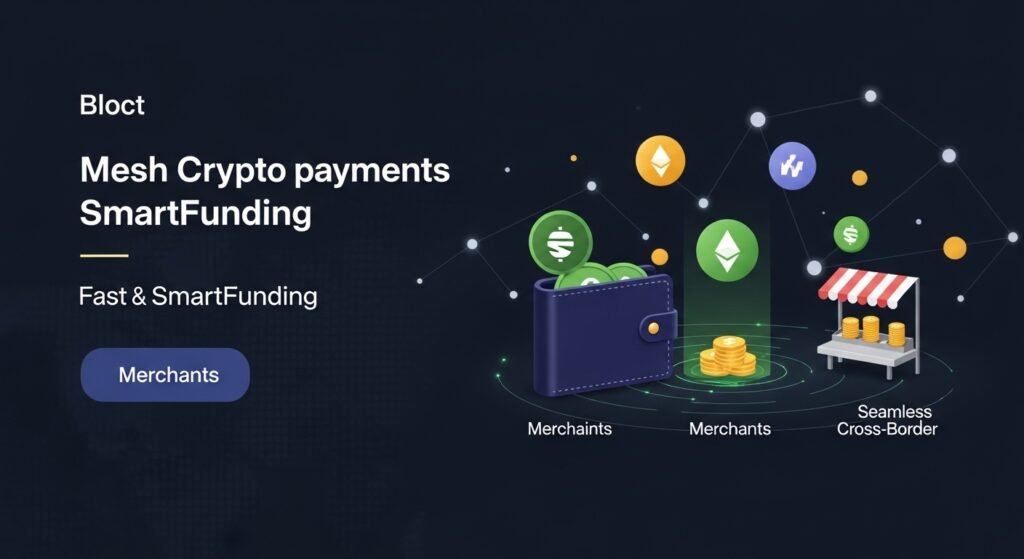
A standout feature of Mesh is its SmartFunding technology. This system enables users to pay in any supported cryptocurrency, while merchants automatically receive payments in stablecoins, ensuring price stability and instant settlement. By bridging the gap between volatile crypto assets and stable payment mechanisms, SmartFunding simplifies merchant adoption and enhances the usability of crypto in everyday commerce.
Mesh has already established a significant global footprint, serving over 400 million users across more than 100 countries. Its platform supports a wide range of applications, including e-commerce, gaming, travel, and embedded finance in digital wallets and apps. This scale demonstrates how decentralized crypto payments network mesh funding—through capital support, partnerships, and technological infrastructure—enables networks like Mesh to expand rapidly while maintaining reliability and security.
Source: PR Newswire – Mesh Series B Funding
What Is Mesh Funding?
Mesh funding refers to the capital raising mechanisms that support decentralized payment networks, designed specifically for building infrastructure rather than functioning as a token sale or traditional ICO. Unlike speculative fundraising models, mesh funding focuses on providing the resources necessary to scale network operations, improve liquidity, and enhance the payment ecosystem.
Mesh has raised substantial capital through Series A, Series B, and additional funding rounds, totaling over $120 million. Major investors, including Paradigm, Consensys, QuantumLight, and PayPal Ventures, have contributed to these rounds, demonstrating strong institutional confidence in the network’s potential and long-term strategy.
A key innovation in Mesh funding is the use of stablecoins, such as PayPal USD (PYUSD), as settlement assets. This model ensures instant liquidity, 24/7 availability, and transparent, auditable transactions, which traditional fiat currencies often cannot match. By settling funding in stablecoins rather than fiat, Mesh reduces friction, aligns with decentralized payment rails, and accelerates the adoption of crypto payments on a global scale.
The strategic rationale behind crypto payments network mesh funding is clear: stablecoins provide price stability, faster settlement, and network-wide interoperability, enabling both merchants and end-users to transact confidently without the volatility risks associated with traditional cryptocurrencies. This model also allows Mesh to attract institutional partners, expand merchant adoption, and scale infrastructure efficiently.
Sources:
Major Funding Rounds and Investors
Mesh’s growth as a crypto payments network has been fueled by strategic capital raises through multiple funding rounds. These rounds have not only provided the financial resources needed to scale infrastructure but have also attracted institutional confidence in the network’s long-term vision.
7.1 Series A Funding
The Series A round focused on expanding Mesh’s markets and embedded finance capabilities. This round included participation from early-stage investors who recognized the potential of decentralized payment networks to disrupt traditional banking and payment rails. The funding enabled Mesh to enhance its APIs, improve wallet integrations, and onboard initial merchant partners, laying the foundation for global expansion.
7.2 Series B Funding — $82 Million
Mesh’s Series B round raised $82 million, led by Paradigm and supported by prominent investors such as Consensys, QuantumLight, and Yolo Investments. A key innovation in this round was the use of stablecoin PYUSD (PayPal USD) for settlement, enabling faster, transparent, and round-the-clock capital deployment. Following this round, Mesh’s total capital raised exceeded $120 million, providing significant runway to scale operations and expand the payments network globally.
7.3 Additional Funding & Expansion
In subsequent funding rounds, Mesh secured additional capital, bringing the total funding to over $130 million. Investors included PayPal Ventures, Coinbase Ventures, Uphold, ByBit’s Mirana Ventures, and SBI, among others. The purpose of this expansion capital was to:
- Accelerate API growth for partners and developers
- Expand merchant adoption worldwide
- Enhance institutional integrations for high-volume transactions
This combination of mesh funding and stablecoin settlements demonstrates how strategic investment can strengthen infrastructure, increase liquidity, and support mass adoption of crypto payments networks.

How Mesh’s Technology Works
Mesh leverages advanced technology to make crypto payments seamless, fast, and reliable for both users and merchants. Its infrastructure is designed to handle global transactions efficiently while reducing volatility risks for recipients.
SmartFunding
A key innovation of Mesh is SmartFunding, which allows users to pay with any supported cryptocurrency, while merchants automatically receive settlements in stablecoins. This removes the need for manual conversions, reduces price volatility exposure, and ensures predictable cash flow for businesses. By automating settlement in stablecoins, Mesh creates a trustworthy and user-friendly payment experience, critical for mass adoption of crypto commerce.
Wallet and Platform Integration
Mesh integrates seamlessly with popular crypto wallets such as MetaMask, enabling users to transact directly from their digital wallets. The network also supports integration with mainstream financial platforms like Revolut, bridging traditional and digital payment ecosystems. These integrations expand usability and make crypto payments accessible to a wider audience, from casual users to enterprise clients.
APIs for Developers and Partners
Mesh provides robust APIs for payment service providers (PSPs), gaming platforms, travel booking sites, luxury goods merchants, and other enterprises. These APIs allow developers to embed Mesh’s payment system into apps, websites, and point-of-sale systems, enabling real-time crypto settlements and reducing friction for end-users. By offering developer-friendly APIs, Mesh ensures scalability, flexibility, and rapid adoption across diverse industries.
By combining SmartFunding, wallet integrations, and APIs, Mesh delivers a full-stack crypto payments network capable of supporting millions of users worldwide. This technological foundation is what makes crypto payments network mesh funding not just a funding model but a sustainable infrastructure for the future of digital commerce.
Use Cases for Crypto Payments Mesh Funding
The Mesh network demonstrates how decentralized crypto payments network mesh funding can power a variety of real-world applications. Its technology and stablecoin-backed settlements provide fast, secure, and scalable solutions across industries.
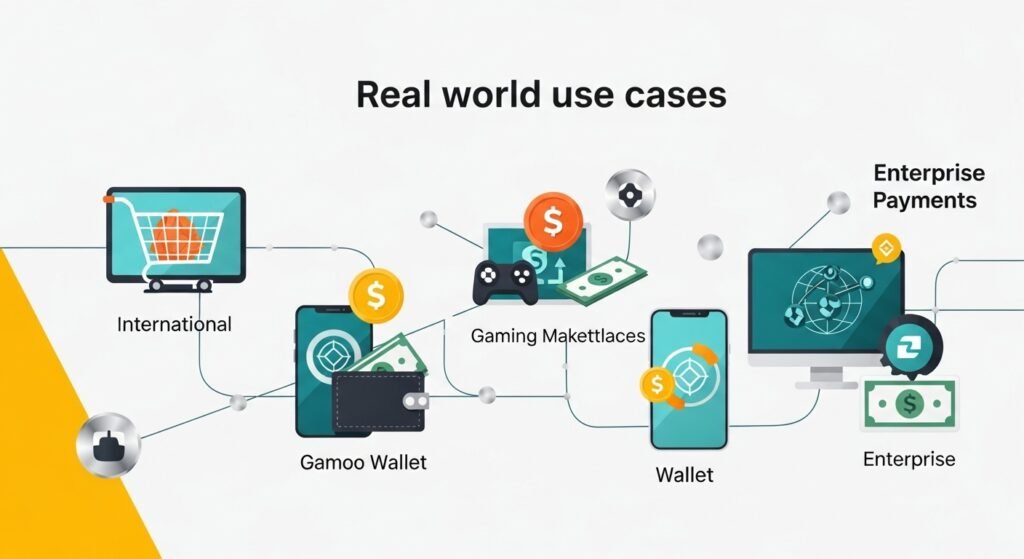
9.1 E-Commerce & Retail
Mesh enables merchants to accept cryptocurrency globally, while automatically converting payments into stablecoins to protect against volatility. Retailers can now expand their customer base internationally without the delays or high fees associated with traditional payment processors.
9.2 Cross-Border Remittances
Traditional cross-border transfers are slow and expensive. Mesh allows instant, low-cost global transfers without relying on banks or correspondent networks. This is particularly beneficial for international workers sending money home or businesses paying overseas partners.
9.3 Embedded Finance in Apps
Developers can integrate Mesh’s APIs to enable pay-with-crypto experiences directly inside apps and wallets. For example, platforms like PayPal can allow users to pay with cryptocurrency while merchants receive settlements in stablecoins, simplifying adoption for mainstream users.
Mesh supports microtransactions for gaming, digital marketplaces, and subscription services. This makes it ideal for Web3 applications where small, frequent payments are common, allowing seamless interaction between users and platforms without high fees or delays.
9.5 Institutional & Enterprise Payments
Enterprises can leverage Mesh for treasury liquidity management and large-scale crypto settlements. Stablecoin-backed transactions ensure predictable accounting, reduce counterparty risk, and streamline cross-border business payments.
By enabling these diverse use cases, Mesh’s funding model and network infrastructure demonstrate how decentralized payment networks can drive mass adoption of cryptocurrency payments in both retail and institutional settings.
Benefits of Mesh Funding for Crypto Payments
The Mesh network and its funding model provide several key benefits for users, merchants, and developers, making it a leading crypto payments network globally.
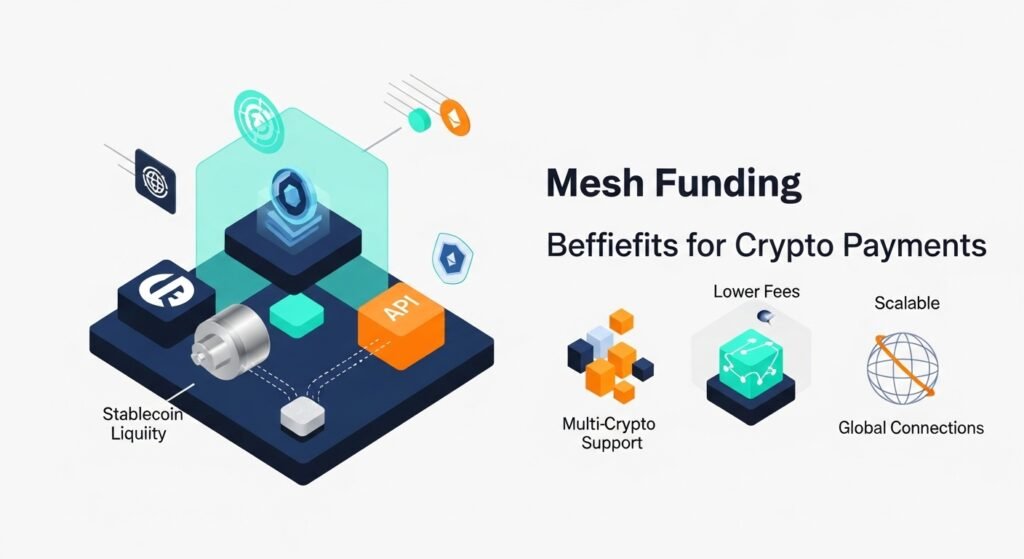
1. Lower Fees and Faster Settlement Models
By removing traditional intermediaries like banks or payment processors, Mesh significantly reduces transaction costs. Payments are settled almost instantly, unlike traditional cross-border transfers that can take days. This efficiency benefits both merchants and consumers by saving time and money.
2. Reduced Reliance on Centralized Intermediaries
Mesh’s decentralized infrastructure eliminates dependence on a single authority for transaction verification. This enhances security, reduces counterparty risk, and ensures that the network can operate continuously even if certain nodes or service providers face issues.
3. Stablecoin Liquidity for Global, 24/7 Settlements
Mesh leverages stablecoins like PYUSD to settle payments in real-time, 24/7. This provides price stability for merchants, prevents volatility-related losses, and makes crypto payments more predictable and trustworthy in daily business operations.
4. Support for Diverse Crypto Assets
Mesh supports a wide range of cryptocurrencies including Bitcoin (BTC), Ethereum (ETH), Solana (SOL), and others. Users can pay with their preferred asset, while merchants receive stablecoins automatically. This flexibility encourages wider adoption and interoperability across crypto networks.
5. Scalability via APIs and Global Partners
Mesh provides developer-friendly APIs that enable businesses, PSPs, and applications to embed crypto payment capabilities seamlessly. Combined with partnerships across industries and countries, this scalability allows the network to grow rapidly while maintaining reliability.
By combining these benefits, Mesh funding not only strengthens the network’s technical and financial foundations but also accelerates global adoption of decentralized crypto payments, demonstrating a clear path toward a borderless, efficient, and resilient payment ecosystem.
Sources:
Challenges & Risks
While Mesh demonstrates the potential of crypto payments network mesh funding, there are several challenges and risks that the network must navigate to ensure long-term success.
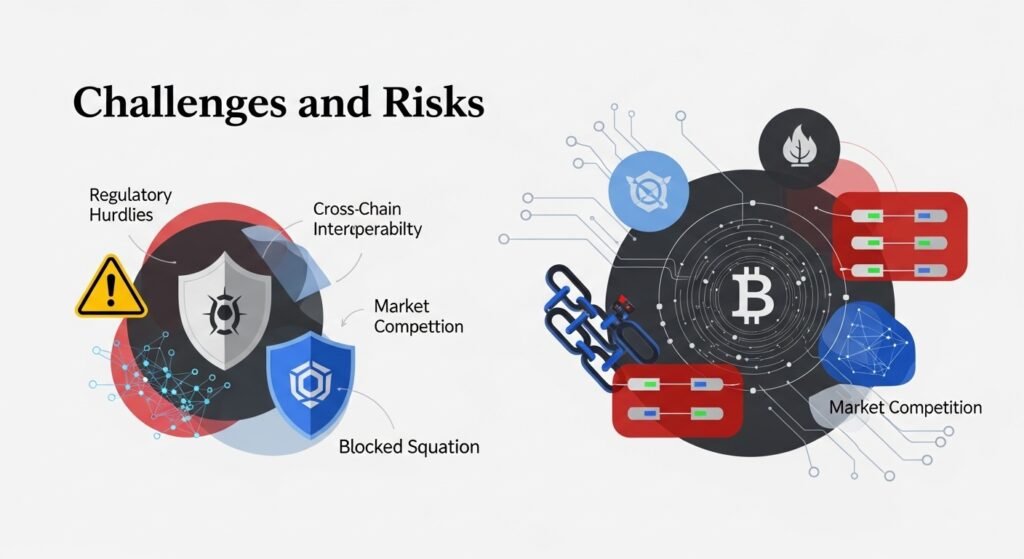
1. Regulatory Uncertainty
Global regulations for stablecoins and crypto payment networks are still evolving. Different countries have varying rules regarding digital assets, anti-money laundering (AML) compliance, and payment licensing. This regulatory uncertainty can affect network adoption, cross-border settlements, and partnership agreements.
2. Security and Compliance Challenges
Operating a global payments network exposes Mesh to security risks, including hacking, fraud, and data breaches. Additionally, ensuring compliance with international financial regulations requires robust monitoring systems and regular audits, which can be resource-intensive.
3. Demand for Interoperability Across Chains
Mesh supports multiple cryptocurrencies, but cross-chain interoperability remains a technical challenge. Efficiently enabling seamless transactions between different blockchain networks is crucial for scaling, particularly for users and merchants transacting in diverse crypto assets.
4. Competition from Traditional Fintech and Blockchain Projects
Mesh faces competition from both traditional financial institutions offering faster digital payment solutions and other blockchain-based payment networks. To stay ahead, Mesh must continue innovating, expanding partnerships, and improving user experience while maintaining cost efficiency and reliability.
Despite these challenges, Mesh’s decentralized funding model, stablecoin settlements, and robust technology infrastructure provide a strong foundation to navigate risks and continue scaling globally.
Future Outlook
The future of crypto payments networks like Mesh is closely tied to the broader adoption of stablecoins and decentralized financial infrastructure. As the ecosystem evolves, several key trends are likely to shape the next phase of global digital payments.
Stablecoins, such as PYUSD (PayPal USD), are increasingly becoming the backbone of cross-border crypto payments. Their price stability, fast settlement, and 24/7 availability make them ideal for global commerce, payroll, remittances, and institutional transactions. Mesh and similar networks will continue leveraging stablecoins to facilitate predictable and efficient settlements, bridging the gap between cryptocurrencies and real-world use.
2. Expansion of Decentralized Payment Infrastructure
Decentralized networks reduce reliance on traditional intermediaries and provide resilient, borderless payment rails. As adoption grows, networks like Mesh will expand their merchant partnerships, APIs, and infrastructure, creating an interconnected ecosystem that supports millions of users worldwide.
The success of Mesh’s funding and technology model will inspire more mesh-style crypto payment networks to emerge. This increased competition and innovation will accelerate the adoption of crypto-based payments in everyday commerce, including e-commerce, gaming, travel, and Web3 applications.
4. Role of Partnerships with Major Tech and Finance Companies
Strategic partnerships with companies like PayPal, Coinbase, and Revolut will be crucial for expanding reach and building trust among mainstream users. Collaborations with financial institutions, payment service providers, and enterprise clients will enable greater integration of crypto payments into existing financial systems.
Overall, the future outlook for crypto payments network mesh funding is promising. With stablecoin-backed settlements, scalable infrastructure, and strategic partnerships, networks like Mesh are poised to transform global commerce, making digital payments faster, cheaper, and more accessible than ever before.

Conclusion
The rise of Mesh as a leading crypto payments network highlights the transformative potential of decentralized payment infrastructure. Through its innovative mesh funding model, Mesh has successfully leveraged stablecoins and institutional investment to scale its operations, enhance liquidity, and deliver reliable, real-time crypto payment solutions.
By using stablecoin-led funding, Mesh demonstrates a new approach to capital raises in the Web3 ecosystem—one that prioritizes infrastructure development, network resilience, and mass adoption over speculative token sales. This model not only strengthens the network’s financial foundation but also encourages confidence among merchants, developers, and institutional partners.
The impact of Mesh and similar networks on global commerce is significant. Faster settlements, lower transaction costs, and seamless cross-border payments are set to redefine the way businesses and consumers interact with digital assets. As adoption grows, these networks will play a crucial role in shaping the future of digital payments, bridging the gap between cryptocurrencies and mainstream commerce while promoting a more decentralized, efficient, and accessible global financial system.
References / SourcesReferences / Sources
- Mesh Secures $82M Series B Funding – PR Newswire
https://www.prnewswire.com/news-releases/mesh-secures-82m-in-series-b-funding-to-build-first-global-crypto-payments-network-302398543.html - Mesh Raises $82M to Expand Global Crypto Payments Network – PYMNTS
https://www.pymnts.com/news/investment-tracker/2025/mesh-raises-82-million-to-expand-global-crypto-payments-network - Crypto Payments Network Mesh Funding Explained – Web Peak
https://webpeak.org/blog/crypto-payments-network-mesh-funding - Mesh Additional Funding from PayPal, Coinbase, and Others – PR Newswire / PYMNTS
https://www.prnewswire.com/news-releases/mesh-secures-additional-funding-from-investors-including-paypal-ventures-to-further-power-crypto-payments-302529571.html - Mesh’s Stablecoin-Led Funding Round Details – CoinDesk
https://www.coindesk.com/business/2025/03/11/crypto-payments-firm-mesh-raises-usd82m-as-stablecoin-adoption-soars
FAQs
Crypto payments mesh funding is a decentralized capital-raising model that supports the growth of crypto payment networks like Mesh. Unlike traditional ICOs or token sales, mesh funding focuses on infrastructure development, liquidity, and network scalability, often using stablecoins for faster, transparent settlements.
Stablecoins, such as PYUSD, provide price stability and 24/7 availability, making them ideal for real-time funding and settlements. Merchants and institutions receive predictable value without exposure to the volatility of traditional cryptocurrencies, which simplifies payments and boosts adoption.
Major investors supporting Mesh include Paradigm, Consensys, QuantumLight, Yolo Investments, PayPal Ventures, Coinbase Ventures, Uphold, ByBit’s Mirana Ventures, and SBI. These investors contribute not only capital but also strategic partnerships to scale the network globally.
SmartFunding allows users to pay with any supported cryptocurrency, while merchants automatically receive stablecoins. This eliminates manual conversion, reduces volatility risks, and ensures instant, reliable settlements across multiple chains and payment rails.